 1-888-488-7720




Want to get rid of nuisance or dangerous snakes in your area?
Use our nationwide directory of wildlife control operators
to locate a professional near you.
Snake Identification
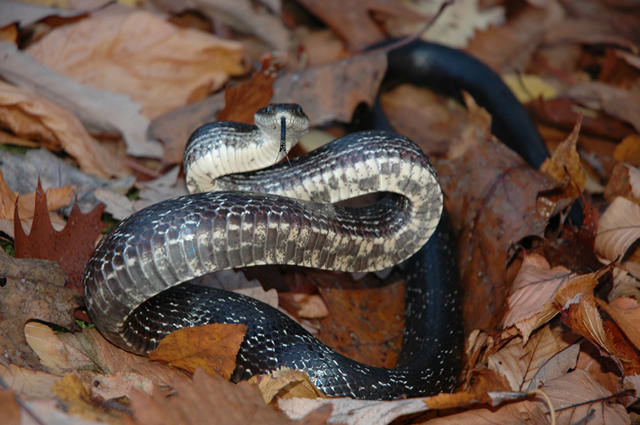
Snake identification becomes very important when you come face to face with a snake or discover one is living in your house or yard. Suddenly it matters very much if it is venomous or non-venomous and how to best deal with what is to many people a genuine crisis.
People sometimes are so frightened by the sight of a snake that they automatically kill it, which is not necessary. This doesn’t count the people who are so ignorant or irresponsible that they kill things just for fun.
Since what most people really want to know is “will this snake hurt me” I am going to focus on identifying venomous snakes in North America. North America has two types of dangerous snakes: vipers and elapids.
Vipers are generally the more familiar of the venomous snakes and include rattlesnakes, water moccasins or cotton mouths and copper heads. The vipers are relatively easy to distinguish from non-poisonous snakes. Vipers have triangular heads and narrow necks. Non-venomous snakes have a head and neck of nearly the same width as the body. There are two exceptions to this rule. The brown water snake has a head and neck resembling the vipers and the coral snake, which venomous, has a body-width head and neck. Viper bodies are also different, being somewhat thicker or stouter in appearance than most harmless snakes. North American Vipers are all pit vipers, so named because of the heat pits or holes located on the head just below the nostrils.
Rattlesnakes, all varieties, can be distinguished from all other snakes by the unique “rattle” on the end of their tail, which grows from a small button to over an inch long as they age. It does not exactly “rattle” however. The sound is much more a buzz.
Cotton Mouths or Water Moccasins are usually found in or around water. As do rattlesnakes, cotton mouths have a warning display: their open, white mouth. If a snake shows this warning display, back off. Their next act will be to strike.
Copperheads really are copper-headed. They have a distinct copper or rusty color to their heads. It can be hard to see, however, as they are often found in dead leaves or other places where they hide or are well camouflaged.
Elapids come in only two varieties in North America: Eastern coral snake and Western coral snake. They are the most highly venomous snakes in North America , but don’t just start killing all colorful, banded snakes you find. Many that closely resemble these dangerous snakes are themselves completely harmless. Remember: red to black, venom lack; red to yellow, kill a fellow. Know your colors and stay safe.
So, if you find a snake on your property or even in your home, don’t freak out. Odds are, it isn’t dangerous. But, if you are not certain, or just don’t like to handle snakes, call a professional. It’s the right thing to do for you and the snake.